Wild Boar in Belgium: Where Do They Live and What Should You Do If You Meet One?
5. oktober 2026 · Jonas Van Eylen
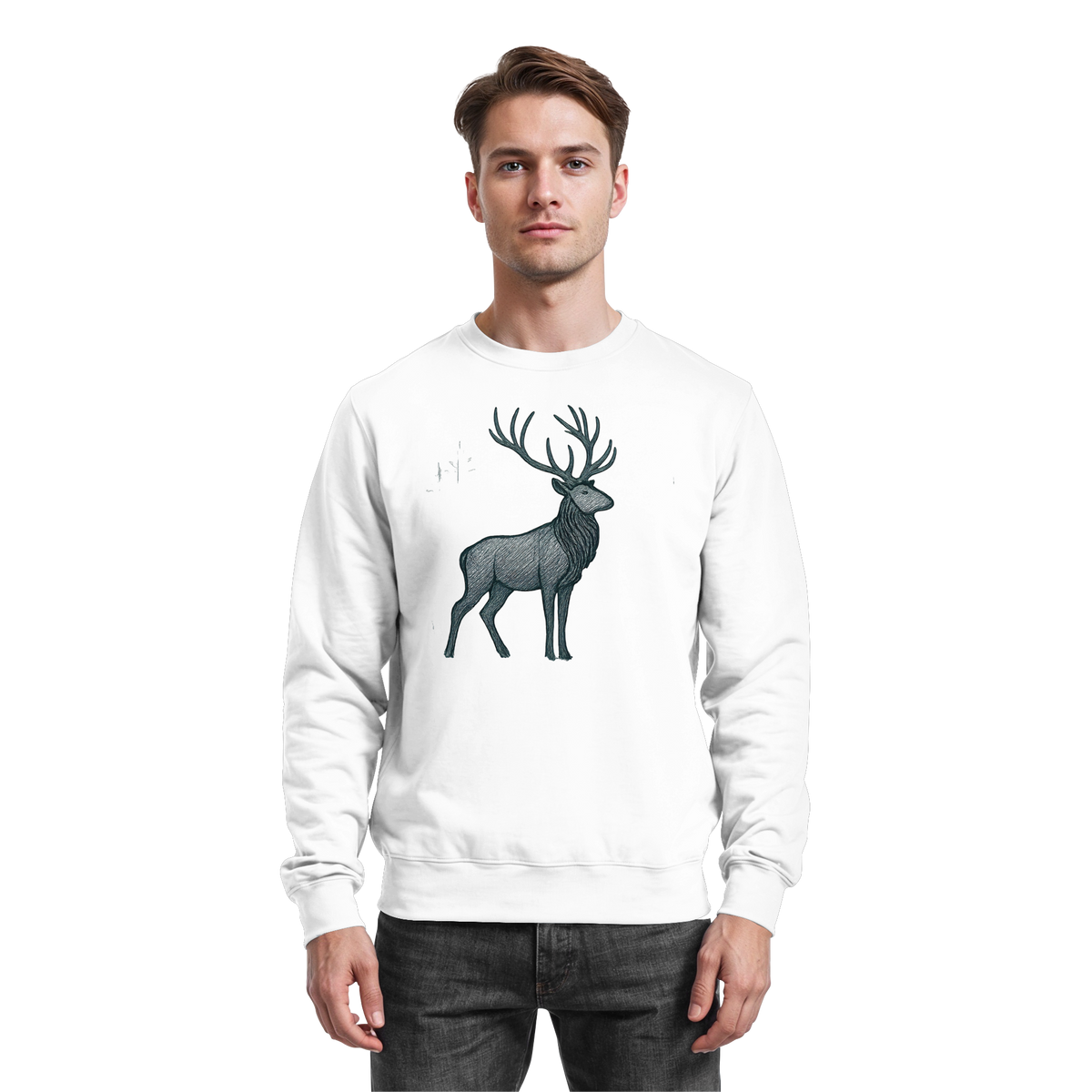
Churned-up ground beside the path, a track in the mud, and sometimes a dark shape disappearing between the trees: in recent years wild boar have become a familiar sight in Belgian forests. Not only in the Ardennes, but increasingly in Flanders too. They are impressive, but also shy. Put on your Mist Crown Sweatshirt, with a red deer in the morning mist, and read on: where do wild boar live, how do they live and what should you do if you come across one?
Where do wild boar live in Belgium?
In Wallonia
Wild boar have long been at home in the Ardennes and the rest of Wallonia. There are so many that the Walloon government speaks of overpopulation, with damage to agriculture and nature and danger on the roads. It wants to bring the numbers down through culling plans.
In Flanders
In Flanders the wild boar is advancing strongly. Most live in Limburg, but they also occur in West Flanders (around Jabbeke and Zedelgem) and, in recent years, in parts of Antwerp, Flemish Brabant and East Flanders.
Nobody knows exactly how many wild boar live in Flanders: there is no good way to count them. The number of animals shot does give an idea. In 2024 that was about 3,400, in 2025 about 2,500, of which some 1,700 in Limburg. According to the INBO, the drop is not because there are fewer wild boar. 2024 was a poor year for acorns and beechnuts, so fewer young were born. In 2025 the forest was full of acorns again, which made the hunters' bait less effective.
How does a wild boar live?
- Weight: in Flanders, sows usually weigh 50 to 80 kg and males (boars) 60 to 150 kg. Boars have striking tusks.
- Family: females live with their young in a group, the sounder, led by a dominant sow. Adult boars usually live alone.
- Piglets: young wild boar have an ochre-coloured coat with light stripes running lengthwise. These stripes disappear after 3 to 5 months.
- Reproduction: a sow is pregnant for 3 months, 3 weeks and 3 days and has 3 to 9 piglets. They used to be born almost all in spring, but in Flanders you now see piglets all year round.
- Lifestyle: wild boar are mainly active at night and cover up to 25 km a night.
- Diet: they eat almost anything, from acorns, beechnuts and fruit to insects, eggs and crops. When looking for food they turn over the ground. You often see this rooting along the paths in the morning.
Spotted turned-up forest floor among the mushrooms? Then a sounder probably passed by in the night. Our Forest Floor T-shirt shows exactly that forest floor: mushrooms among roots and fallen leaves.
What should you do if you meet a wild boar?
Wild boar are very shy by nature. During the day they almost always run off quickly as soon as they hear or smell you. According to Natuur en Bos, in almost all encounters you can avoid a confrontation by staying calm. An attack is exceptional.
Here is how to deal with it:
- Stay calm and make no sudden movements.
- Keep your distance and give the animal room to run away. Never get between a sow and her piglets.
- Do not move closer for a photo.
- Is the distance getting too small? Then find a safe spot, for example behind a tree or on top of something.
- Do you see an injured wild boar? Keep your distance and notify the police.
A wild boar can defend itself, though, if it feels cornered or if a sow is protecting her young.
With a dog
Keep your dog on a lead at all times in the forest. Small wild boar flee from a dog, but larger animals try to chase it away. Keep your dog calm, with a command or a treat.
Never feed them
Never feed wild boar. Animals fed by people lose their fear. For safety reasons, such animals sometimes have to be killed. If you see wild boar or their tracks in a residential area, you can report it via wildinzicht.be.
Wild boar and traffic
Wild boar cannot judge the speed of cars and often cross unexpectedly. So drive carefully at night in wooded areas, especially where road signs warn of crossing wildlife. See one wild boar crossing? Then the rest of the sounder often follows. After a collision, contact the police. Note: damage to your car is usually only covered by comprehensive insurance.
African swine fever
In September 2018, African swine fever was detected in wild boar near Etalle, in the province of Luxembourg. A major response followed, with zones and culling, and on 20 November 2020 Belgium was officially declared free by Europe. The disease has not been detected in Belgium since.
In Germany, however, the disease remains present. In 2025 almost 2,000 infected wild boar were found there, mainly in Hesse. In the summer of 2025, cases also appeared in North Rhine-Westphalia, about 180 km from the Belgian border. The FASFC therefore asks people not to bring back meat from infected areas. Found a dead wild boar? Do not touch it and report it to the local authority or the FASFC.
Hunting and hiking
In Wallonia, wild boar may be hunted with driven hunts in the forest, from 1 October to 31 January. On those days the paths in the hunting area are off limits. You recognise it by the red notices at the start of the paths. You can read more about this in our article on nature trips during the autumn holidays.
Want to discover the Ardennes in autumn? Then you are also in the middle of the deer rut. A warm layer like the Trail Crest Hoodie, with a vintage hiking badge, makes those early mornings a lot more pleasant.
Frequently asked questions
Are wild boar dangerous to hikers?
Rarely. Wild boar are shy and usually run away. A confrontation mainly happens when the animal feels cornered or when a sow is protecting her piglets. Stay calm, keep your distance and keep your dog on a lead.
Where can you see wild boar in Flanders?
Mainly in Limburg, but also in West Flanders (around Jabbeke and Zedelgem) and increasingly in Antwerp, Flemish Brabant and East Flanders. Because they are mainly active at night, you usually see their tracks rather than the animals themselves.
When are wild boar born?
They used to be born mainly in spring. In Flanders, piglets are now born all year round. You can recognise them by their striped coat.
For those who know the wild forest
Wild boar, red deer and, more recently, the wolf too: the Belgian forest is wilder than you think. Discover our designs with wild animals, such as the Deep Timber Hoodie with a bear in the primeval forest, or browse the whole Wildlife collection. Or choose the Lone Dusk T-shirt, with a lone wolf against a dusky sky. Shipping is free across the EU from €45 (otherwise €4.99).