Beavers in Belgium: Where Do They Live and How Do You Recognise Their Signs?
2026. október 28. · Jonas Van Eylen
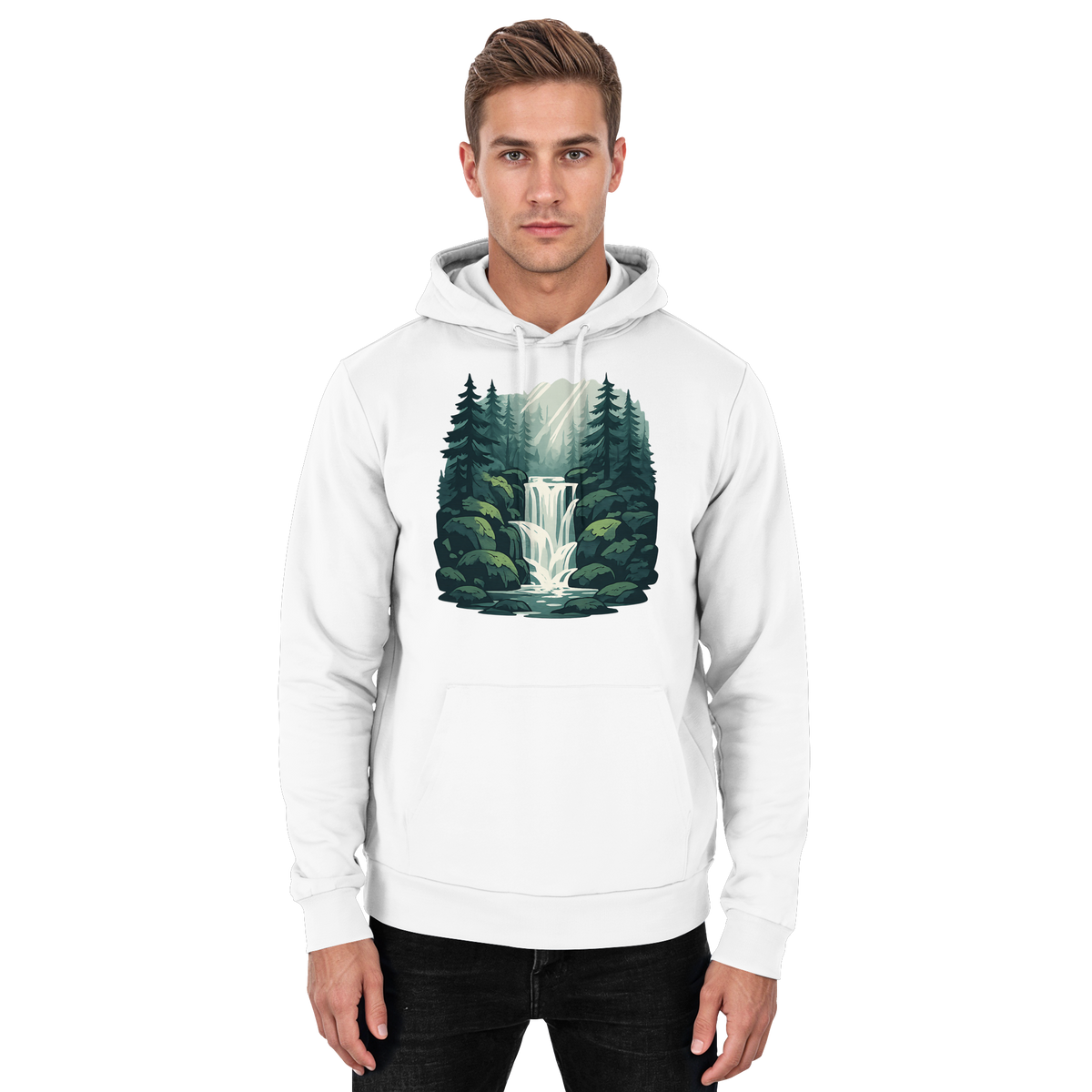
A tree trunk that looks like a sharpened pencil, a dam of branches across a stream and a splash in the water after dark. If you keep your eyes open, you'll discover that the beaver is back in Belgium. A century and a half after it was wiped out in Flanders, hundreds of families now live along our rivers again. Pull on your Fall Creek Hoodie, with water tumbling over mossy rocks, and discover where the beaver lives and how to recognise its signs.
The beaver in brief
The beaver is the largest rodent in Europe. According to Natuurpunt, it measures 95 to 137 cm in length, tail included, and weighs 15 to 35 kilograms.
- The tail is broad, flat and scaly. He uses it as a rudder when swimming, and when he senses danger, he slaps it hard on the water as an alarm.
- He lives in a family: a pair together with this year's young and often also last year's.
- Lifespan: on average 7 to 8 years, up to around 16 years.
- An animal of the evening. In summer he leaves his lodge in the early evening and returns between 3 and 6 in the morning.
- No hibernation. Even in winter the beaver can be quite active, and then mostly eats bark and twigs. Which animals do hibernate? Read our article on hibernating animals in Belgium.
What does a beaver eat?
A beaver is a herbivore. He eats rhizomes, reeds, grasses and herbs, and above all the bark, twigs and leaves of soft trees such as willow, poplar and alder. According to Natuurpunt, he eats up to 600 to 700 grams of bark a day. Sometimes he also nibbles on maize, beets or fruit trees growing close to the water.
From wiped out to back again
- 1848: the last beaver in Flanders is killed. It had been wiped out by hunting, for its fur and meat.
- 1998-2000: in Wallonia, 101 beavers from Germany are illegally released. One of the people behind it, Olivier Rubbers, was fined €2,478 for this. Yet that illegal action is today the root of the beaver's return across all of Belgium.
- Autumn 2000: the first beaver is seen again in Flanders, coming from Wallonia.
- Since 2003: there are regular signs along the Dijle and the Laan.
- 2024: in North Brussels the first beaver since the 19th century settles on the daylighted Senne.
How many beavers are there in Belgium?
| Region | Number |
|---|---|
| Flanders | around 600 territories in 2026 according to INBO: 92 in Limburg and 508 in the rest of Flanders (17 per cent more than the year before) |
| Wallonia | an estimated almost 3,000 beavers |
| Brussels | a first beaver on the Senne since 2024 |
The number of sightings is also rising fast. In 2025, 5,847 beavers were reported in Belgium, compared with 1,243 in 2015. These are sightings, not counts of individual animals, but they clearly show how strongly the beaver is spreading.
Recognising the signs of a beaver
You rarely see a beaver itself. Its signs are much easier to find:
- Gnawed trees. A tree gnawed through by a beaver ends in a typical pencil point. Gnawed willows often sprout again.
- Peeled branches. Branches without bark, with fine tooth marks, along the bank or in the water.
- Dams. A beaver builds dams of branches and earth to raise the water level. This way the entrance to its lodge lies underwater, safe from predators.
- A lodge. A large heap of branches and mud on the bank, with the entrance underwater. Sometimes a beaver lives in a burrow in the bank instead.
- Runs and slides. Trodden paths from the water onto land, and smooth slopes where it slides in and out of the water.
- Scent mounds. Small heaps of mud, leaves and twigs along the bank, which it marks with its scent.
- Paw prints in the mud.
Follow a river where beavers live and you'll notice how they change the landscape. The same goes for the fish swimming against the current, as on the Silver Run Sweatshirt, with a salmon working its way through the rapids.
Don't confuse them with the coypu (nutria) or the muskrat
- The coypu (nutria) comes from South America and is an invasive alien species. After the beaver, it is the largest rodent in Flanders. It has a round, thin tail, not a flat one.
- The muskrat is much smaller, related to voles, and also an invasive alien species.
Where can you see beavers?
- Dijle and Laan (Flemish Brabant): this is where the beaver first returned to Flanders.
- The Campine: along the Nete and the Laak, and around Arendonk and Balen.
- Bourgoyen-Ossemeersen in Ghent: signs have been found here.
- The Senne in North Brussels.
- The Haute-Sambre in Wallonia, near Thuin and Erquelinnes.
Beavers also live in many other Walloon rivers. If you want to be sure, join a guided activity run by a nature association. Natuurpunt, for example, organises beaver walks.
Tips for spotting a beaver
- Go at dusk. The beaver is an animal of the evening: your best chance is at sunset or just after. Also read our tips for hiking in the dark.
- Be quiet and patient. Sit down at a spot with a view of the water and wait.
- Keep your distance and don't disturb the animals.
- Keep your dog on the lead.
- Not sure about a sign? Take a photo and have it identified with the ObsIdentify app, or report your sighting on waarnemingen.be.
A fresh evening on the bank, waiting for a head to appear above the water: then a warm layer like the Still Roots Hoodie, with deep forest textures and earthy tones, is no unnecessary luxury.
Protection and conflicts
The beaver is strictly protected in Belgium. You may not kill, catch or disturb it, and its lodges and dams are protected too. A dam may only be removed with a permit.
Yet its success also brings problems. Beavers can flood fields and paths, and gnaw through young trees. In the province of Antwerp, the authorities carried out 4,500 inspections in 2025, with more than 1,000 interventions on dams, at a cost of more than €100,000. Sometimes the beavers have rebuilt a dam the very next day. Have you suffered damage from a beaver? Report it to the Agency for Nature and Forests.
There are benefits too. Beaver dams create new wetlands, with more insects, birds and fish. They hold water back during dry spells and slow down erosion.
Frequently asked questions
Where do beavers live in Belgium?
Along rivers and streams in Flanders, Wallonia and, since 2024, Brussels too. In Flanders, beavers are mainly found along the Dijle, the Laan and in the Campine. In Wallonia there are an estimated almost 3,000.
How do you recognise the signs of a beaver?
By trees with a typical pencil point, peeled branches, dams of branches and earth, lodges on the bank and slides from the water onto land.
Is a beaver dangerous?
No, a beaver is shy and keeps out of people's way. It is, however, strictly protected: you may not disturb it or its lodge or dam.
For lovers of rivers and wild animals
A dam that holds back the water, a pencil point on a willow and a splash at dusk: the beaver is one of the finest comebacks in Belgian nature. Discover our animal designs in the Wildlife collection, such as the Mist Crown Sweatshirt with a deer in the morning mist, or the Deep Timber T-shirt with a bear in an ancient forest. Shipping is free across the EU from €45 (otherwise €4.99).
✦ Arvenzo