Hiking in the Rain: 10 Tips to Stay Dry and Warm
7 octombrie 2026 · Jonas Van Eylen
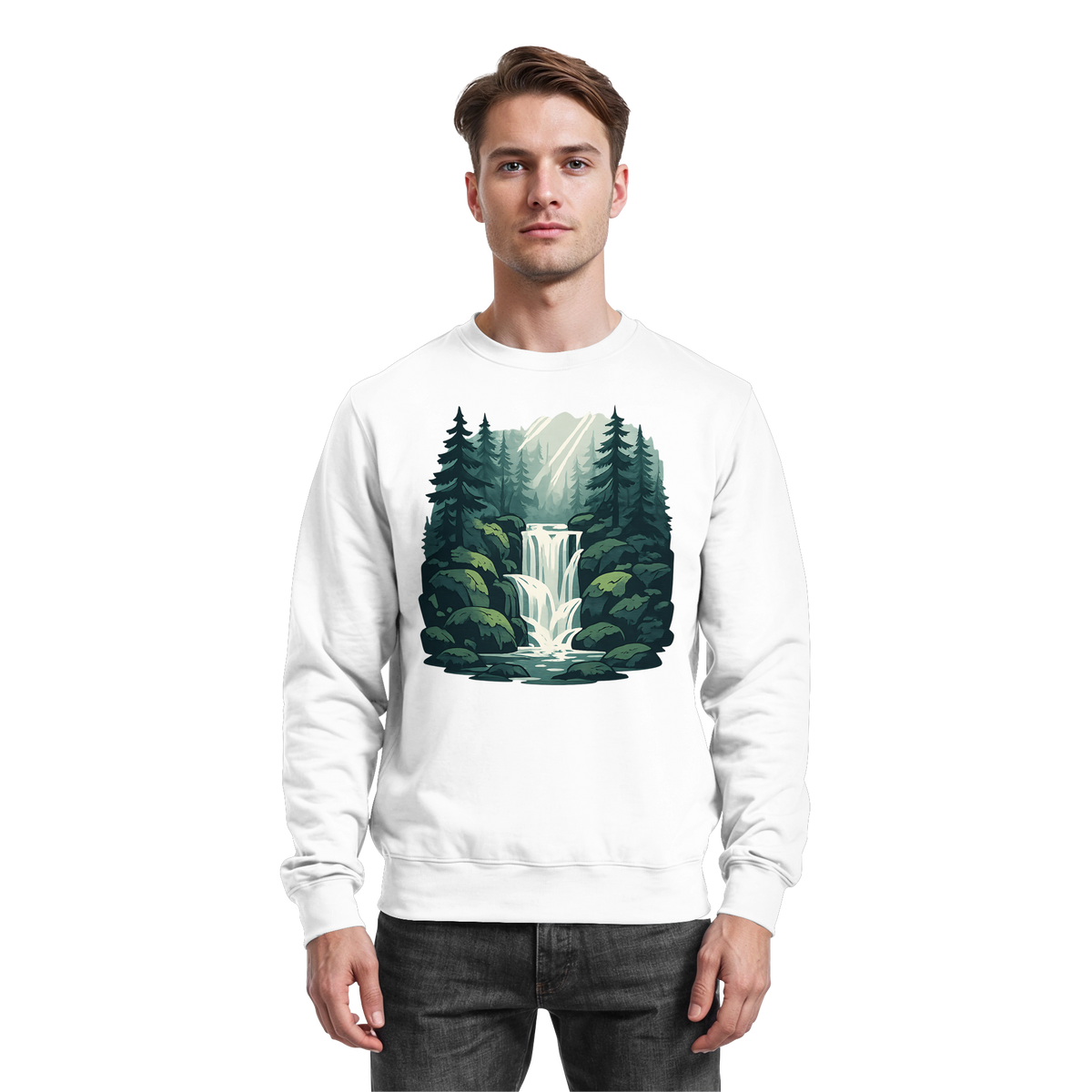
If you only go hiking in Belgium when the weather is fine, you will often stay indoors. According to climate figures from the Royal Meteorological Institute (RMI), Uccle sees precipitation on roughly 190 days a year: more than half of all days. And there is hardly any difference between summer and winter. The good news: with the right preparation, a walk in the rain is wonderful. The paths are quiet, the forest smells fresh and you come home feeling good. Afterwards, slip into your Fall Creek Sweatshirt, with a waterfall over mossy rocks, and enjoy the afterglow. Here are 10 tips to stay dry and warm.
1. Choose a truly waterproof rain jacket
There is a big difference between water-repellent and waterproof:
- A water-repellent jacket makes droplets bead off, but in a long shower the water eventually gets through.
- A waterproof jacket keeps water out, even in a long shower or when there is pressure on it, such as under the straps of your rucksack.
For a few hours of walking in the rain, you need a waterproof jacket. Also look for taped seams: that is where a jacket otherwise leaks first.
2. Understand the hydrostatic head
On a rain jacket's label you often see a number in millimetres, for example 10,000 mm. That is the hydrostatic head: how much water pressure the fabric can withstand before water comes through. The higher, the more waterproof. As a rule of thumb, from about 10,000 mm you stay dry in most conditions. Good hiking jackets go up to 20,000 mm or more.
3. Pay attention to breathability
A waterproof jacket that doesn't breathe makes you wet from the inside: your sweat stays trapped in your jacket. Breathability is expressed in grams of water vapour per m² per 24 hours. From about 10,000 g, you can call it good breathability. Especially when you are walking uphill, that makes a big difference.
4. Dress in three layers
The three-layer system is the basis of all outdoor clothing:
- Base layer: a shirt that wicks away sweat. Choose synthetic material or merino wool.
- Mid layer: a warm layer that retains heat, such as a fleece, sweatshirt or hoodie.
- Outer layer: your rain jacket, which keeps out wind and rain.
Several thin layers keep you warmer than one thick jumper. You can also take layers off if you get hot while climbing. A warm hoodie works perfectly as a mid layer, such as the Pure Ground Hoodie: no big design, just a pure colour and the name Arvenzo. Want to know the difference between a hoodie, a sweatshirt and a jumper? Then read this article.
5. Avoid cotton against your skin
Cotton feels soft, but it holds moisture instead of wicking it away. A wet cotton shirt against your skin draws heat from your body. As a result you cool down faster, especially when you stop for a moment or when it is windy. So keep your cotton clothing for the mid layer or for after the walk, and wear a quick-drying shirt against your skin.
6. Keep your feet dry
Wet feet are the quickest way to spoil your enjoyment of hiking. Choose waterproof hiking boots and wear socks that stay warm when they get damp, such as wool socks. On muddy paths, gaiters keep water and mud out of your boots. For a long trip, pack an extra pair of socks in a plastic bag.
Such a day ends with muddy boots by the door, the picture on our Trail Rest Hoodie.
7. Dry your boots the right way
Never put wet hiking boots against the radiator or in the sun. Leather and technical materials can dry out, become brittle and crack. Take out the insoles, loosen the laces and let them dry at room temperature, in a well-ventilated spot. Stuff them with kitchen paper or a dry cloth to absorb the moisture, and replace it a few times. Newspaper also works, but the ink can come off.
8. Protect your rucksack and your phone
Even a "waterproof" rucksack gets wet on the inside in a long shower. Use a rain cover for your rucksack, or put your things in a dry bag or plastic bags. Keep your phone in a resealable pouch so you can still use it for your route in the rain.
9. Check the weather and the warnings
Light rain is no problem, but thunderstorms, storms or heavy rain are. Before you set off, check the RMI website or app. The RMI uses colour codes:
- Yellow: be aware.
- Orange: be prepared and follow the advice.
- Red: take action.
With an orange or red code, it is better to postpone a walk in the forest. Along the way, wet tree roots, stones and boardwalks are extra slippery. Walk over them slowly and stay away from streams that are running high because of the rain.
10. Recognise the signs of hypothermia
In wet and windy weather you lose body heat much faster. Hypothermia means your body temperature drops below 35 °C. According to the Red Cross, these are the signs:
- cold, pale skin;
- blue lips or fingers;
- shivering;
- fatigue or drowsiness.
Do you notice these signs in yourself or a fellow walker? Find a warm place, take off wet clothes and wrap yourself in something warm. If someone becomes drowsy or confused, call 112.
Why hiking in the rain is worth it
After a rain shower, the forest smells wonderfully fresh. That scent even has a name: petrichor. The word was coined in 1964 by two Australian scientists, from the Greek petros (stone) and ichor (the blood of the gods). The smell comes from geosmin, a substance produced by soil bacteria. And a nice bonus: in bad weather you often have the paths to yourself.
On a rainy autumn day, the forests are especially beautiful. You can find inspiration in the best autumn forests in Belgium, and what to wear for a trip in the Ardennes is covered in hiking in the Ardennes: what to wear.
Frequently asked questions
What should you wear for hiking in the rain?
Dress in three layers: a quick-drying shirt against your skin, a warm mid layer such as a fleece or hoodie, and a waterproof, breathable rain jacket. Combine that with waterproof boots and wool socks.
What does a hydrostatic head of 10,000 mm mean?
The hydrostatic head indicates how much water pressure a fabric can withstand before water comes through. From about 10,000 mm you stay dry in most conditions.
How do you dry wet hiking boots?
Take out the insoles, loosen the laces and let the boots dry at room temperature, in a well-ventilated spot. Stuff them with kitchen paper and never put them against the radiator.
After the rain comes the warm hoodie
Coming home after a wet walk, dry clothes on, a hot drink in your hands: that is what you do it for. Choose the Compass Rose Hoodie, with a compass framed by mountain lines and a fleece lining, or discover all our hoodies. Or choose the Trail Compass Sweatshirt, with a compass in warm earthy tones. Shipping is free across the EU from €45 (otherwise €4.99).