Stargazing in Belgium: The Best Spots and Meteor Showers in 2026
24 septembrie 2026 · Jonas Van Eylen
Have you ever seen the Milky Way with the naked eye? In most of Belgium that's almost impossible: our country is one of the most brightly lit places in Europe. Yet there are still places where the night gets truly dark. With a bit of planning you can see hundreds of stars there, and with some luck a shooting star.
Why do you see so few stars in Belgium?
Street lights, lit motorways, greenhouses and cities cause light pollution: an orange glow that washes out the fainter stars. The further you get from those light sources, the more stars you see. The difference between a city garden and a dark heath is huge: from a few dozen to thousands of stars.
The best places for stargazing in Belgium
High Fens (province of Liège)
An open, sparsely populated plateau at around 600 metres, with few trees blocking the view. One of the darkest places in the country. Just across the border lies Eifel National Park, an officially recognised "Dark Sky Park".
The Ardennes in the province of Luxembourg
Higher, open plateaus far from the big cities. Around Bastogne, Saint-Hubert or in the Semois region the sky can get very dark. Just across the border, in the Grand Duchy of Luxembourg, Putscheid is recognised as a "Dark Sky Community".
Hoge Kempen National Park (Limburg)
The wide heathlands offer a broad view of the sky. It's one of the darkest places in Flanders.
Het Vinne (Zoutleeuw) and De Blankaart (Diksmuide)
Open water and meadows, far enough from buildings to see many stars on clear nights. A good option in Flemish Brabant and West Flanders.
Tip: stay on public roads and paths, and only enter nature reserves at night where that's allowed.
Shooting stars: the dates for late 2026
| Meteor shower | Peak | Rate per hour (ideal) | Moon |
|---|---|---|---|
| Orionids | night of 21-22 October | ±20 | fairly bright (disturbing) |
| Leonids | night of 16-17 November | ±10-15 | half moon |
| Geminids | night of 13-14 December | up to ±120 | thin crescent: ideal! |
| Ursids | 22-23 December | ±10 | full moon (disturbing) |
The Geminids are the highlight of 2026: lots of meteors and little moonlight. Dress warmly, head to a dark spot after midnight and simply look at a large patch of sky. You don't need a telescope or binoculars.
The "rate per hour" is a theoretical maximum under a perfectly dark sky. In Belgium you'll see fewer in practice, but from a dark spot you can still expect dozens of meteors per hour during the Geminids.
Night of Darkness: Saturday 10 October 2026
Every year, dozens of Flemish municipalities switch off as much lighting as possible for one night during the Nacht van de Duisternis (Night of Darkness). Public observatories and nature organisations organise night walks and stargazing evenings. A perfect chance to discover how dark it can get in your own area. Check the Bond Beter Leefmilieu website for events near you.
7 tips for a successful night under the stars
- Choose a clear night without clouds. Check the cloud forecast, not just the rain forecast.
- Check the moon. Around full moon you'll see far fewer stars. Around new moon it's darkest.
- Let your eyes adjust. Your eyes need 20 to 30 minutes to adapt to the dark.
- Use red light. A red torch doesn't ruin your night vision. A normal phone screen does.
- Bring something to lie on: a mat or a reclining chair. Your neck will thank you.
- Download a star chart app to recognise constellations and planets.
- Dress warmer than you think. Sitting or lying still on a cold night is very different from walking.
Staying warm under the stars
A clear night is almost always a cold night: without clouds, the warmth of the day escapes quickly. Wear layers, a hat and gloves, and bring a blanket and a thermos with something hot. A fleece-lined hoodie with a hood is perfect to pull over a warm jumper when you're sitting still for a long time.
Frequently asked questions
Where is the darkest place in Belgium?
The High Fens and the Ardennes plateaus in the province of Luxembourg are among the darkest areas. In Flanders, Hoge Kempen National Park and remote polders are good options.
When can you see the most shooting stars?
During the Perseids (around 12 August) and the Geminids (around 13-14 December). In 2026 the Geminids are especially good because the moon gives hardly any light.
Do you need a telescope for stargazing?
No. Shooting stars are best watched with the naked eye. Binoculars are nice for the moon, star clusters and the Milky Way.
For those who love to look up
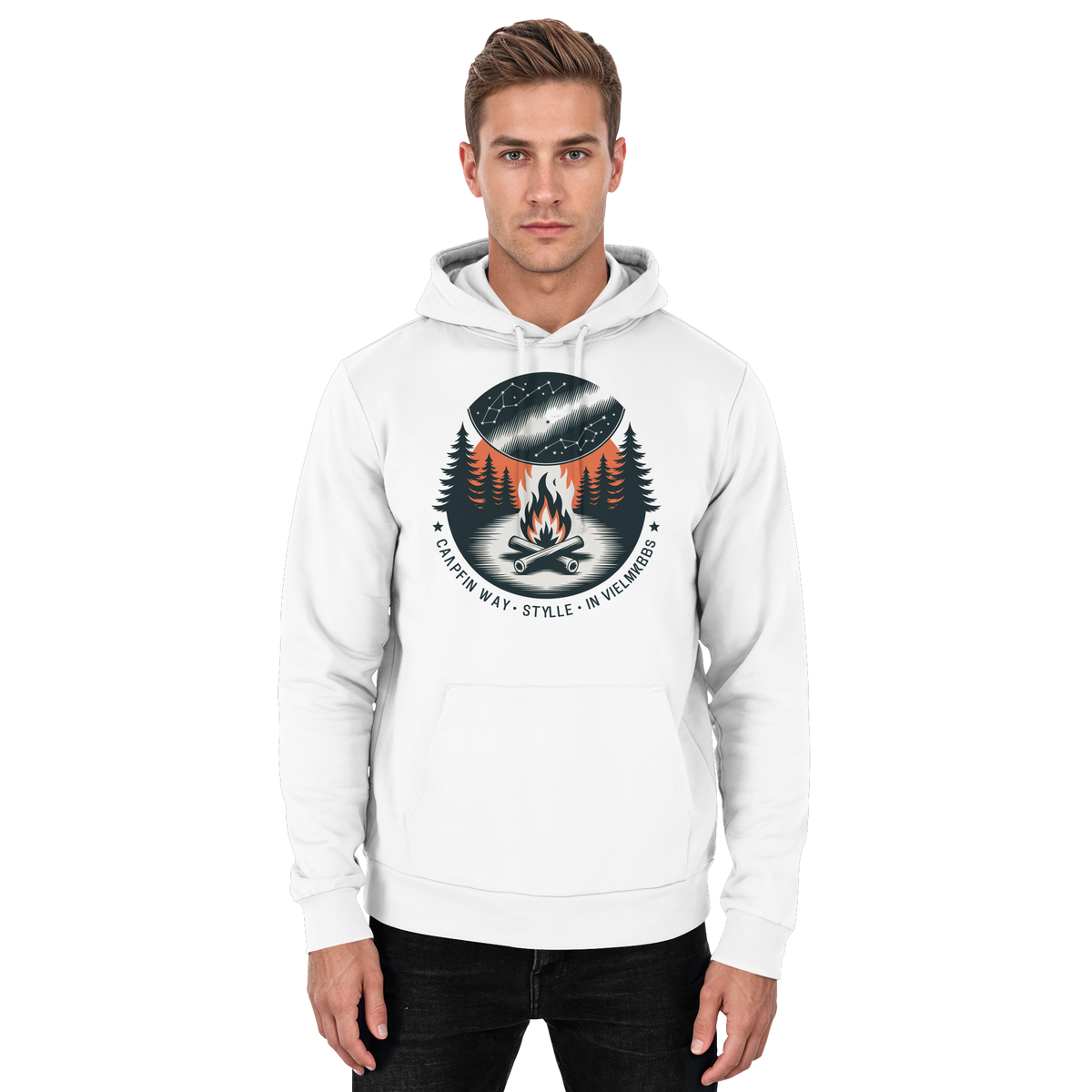
Our Moon & Night Sky collection is made for nocturnal adventurers: from the Star Map Hoodie with a campfire under the stars to the North Light Sweatshirt and the Crescent Peak Shirt with a crescent moon above the mountains.