Picking sweet chestnuts in Belgium: when, where and how?
3 ottobre 2026 · Jonas Van Eylen
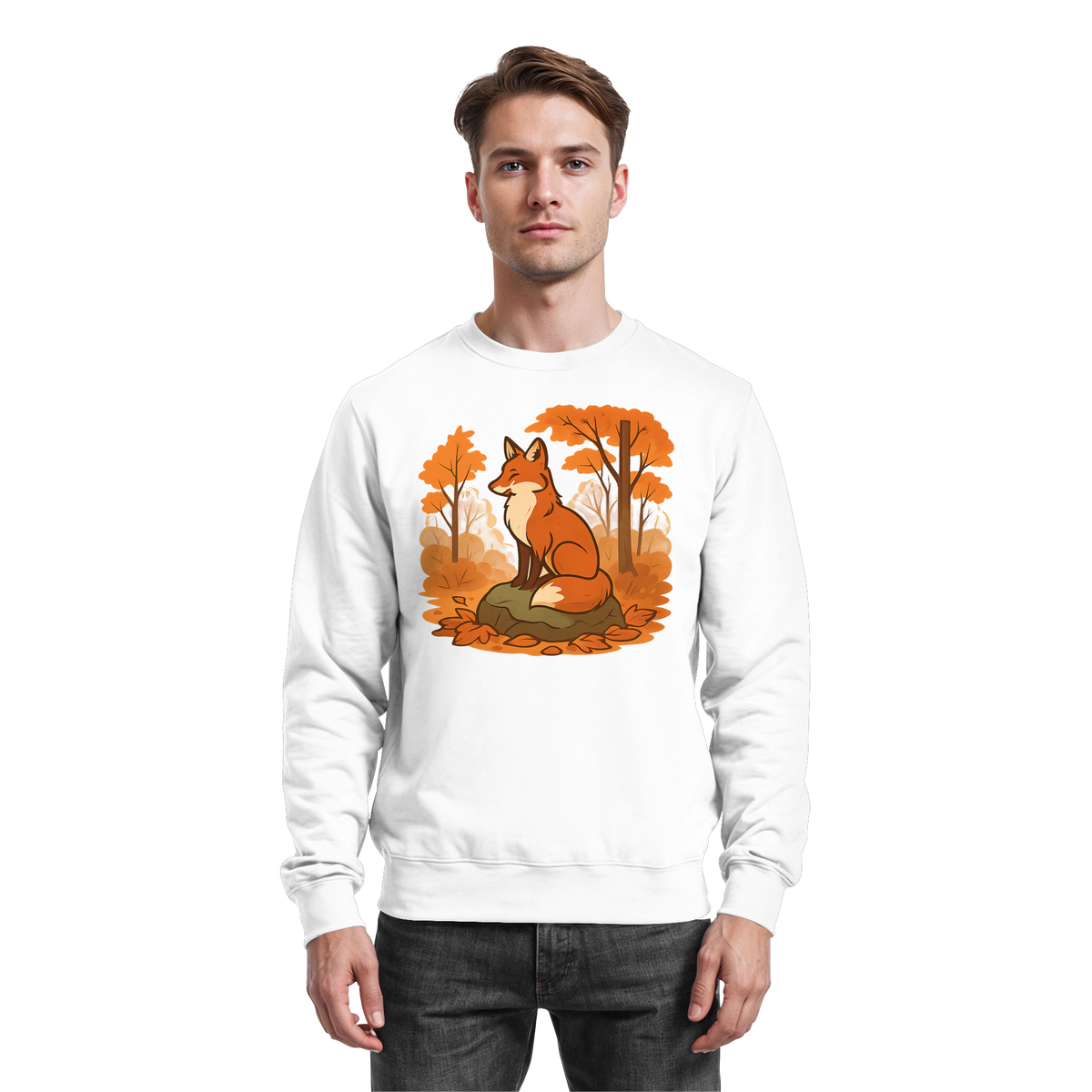
Few things are as cosy as a bag of warm, roasted chestnuts on a crisp autumn day. And the best part: in Belgium you can simply pick them yourself. Put on your Ember Trail Sweatshirt, with a fox on a path full of autumn leaves, bring a pair of gloves and go looking. In this article you will read when sweet chestnuts are ripe, how to recognise them, what the rules are and how to roast them.

First order? Use code NATUUR10 for 10% off. Free shipping across the EU from €45.
When are sweet chestnuts ripe?
Sweet chestnuts ripen in October. The peak is often around the end of October, and you can still find some well into November. How many fall differs greatly from year to year. In a so-called mast year the paths are strewn with nuts, in other years you only find a handful. The tree needs a warm summer and autumn to bear good fruit.
Choose plump, glossy nuts with a deep brown colour. Leave hollow or shrivelled ones where they are.
Sweet chestnut or horse chestnut?
This is the most important thing to know: only the sweet chestnut is edible. The horse chestnut, which you collected as a child to make little figures, is poisonous to humans. Fortunately they are easy to tell apart:
| Sweet chestnut | Horse chestnut | |
|---|---|---|
| Husk | Densely covered in long, sharp spines, like a hedgehog | Short, scattered spines |
| Nuts per husk | Usually 2 or 3 | Usually 1 |
| Nut | Flatter, with a point at the top | Large, round and smooth |
| Leaf | One long leaf (10-20 cm) with a sharply toothed edge | Palmate, with 5 to 7 leaflets on one stalk |
| Edible? | ✅ Yes | ❌ No, poisonous |
Not sure? Then leave the nut where it is. A sweet chestnut husk is so spiny that you cannot pick it up with your bare hand. So bring sturdy gloves.
May you pick chestnuts in the woods?
In Flanders
Officially, under the Forest Decree you may not take anything from woods and nature reserves. In practice, picking a small amount of chestnuts is tolerated. A Natuur en Bos ranger put it this way to the VRT: if you pick a few, they say nothing. Anyone who takes kilos or wants to sell them does risk a fine. The reason is simple: fallen nuts are also winter food for squirrels, jays and wild boar.
In Wallonia
In Wallonia the rules are more concrete. In the regional forests you may pick forest fruits for your own use, under these conditions:
- at most the contents of one 10-litre bucket per person per day;
- only between sunrise and sunset;
- never for sale;
- not in nature reserves.
Municipal woods are sometimes reserved for residents, and on private land you always need the owner's permission. Also keep the hunting season in mind: in the autumn holiday article you can read how to recognise hunting days.
Where do you find sweet chestnuts?
The sweet chestnut is a fairly common tree in Flanders, especially on sandy loam, loam and in the Campine (Kempen). In the Polders and the dunes you hardly come across it. In the Ardennes it is actually rare: because of the late frost and the cooler summers it bears little fruit there.
A few pointers:
- The Sonian Forest is a well-known place to look for chestnuts in autumn.
- Parc de la Châtaigneraie in Flémalle (near Liège) has a row of chestnut trees more than 150 years old.
- Parks, avenues and woodland edges are often the best spots. Chestnuts were once planted there with enthusiasm.
The best advice: learn to recognise the tree by its long, toothed leaves, and you will find them on your usual walking route. Note: the Kastanjebos in Herent, despite its name, has hardly any chestnut trees left.
While you search, also take a look at the forest floor: in October there are mushrooms everywhere, like on our Forest Floor Hoodie. Be sure to read our article on mushroom hunting in Belgium beforehand, because stricter rules apply there.
Roasting chestnuts: how to do it
In the oven
- Do the float test: put the chestnuts in a bowl of water. Throw away any that float, because they are often hollow or eaten by a grub.
- With a sharp knife, cut a cross into the rounded side of each chestnut. This stops them from exploding in the oven.
- Preheat the oven to 200 °C and roast the chestnuts for 15 to 20 minutes, until the skin curls open.
- Wrap them straight away in a tea towel and roll them back and forth for a moment. This makes the skin come off more easily.
Over the fire
In Italy, chestnuts are roasted in a pan with holes over an open fire. Afterwards you let them steam for a while in a damp cloth. Over a campfire it goes faster than in the oven, so stay close. An evening around the fire like that belongs to autumn, just like on our Rustic Retreat Hoodie with a tent and campfire.
Storing
Fresh sweet chestnuts do not keep for long. So it is best to roast them within a few days. In a cool, dry place they keep for about a week, a little longer in the fridge.
Did you know?
- The Romans brought the sweet chestnut to Western and Central Europe. It originally grows in South-East Europe and Asia Minor.
- In parts of Italy and Corsica, people used to live on chestnuts for a large part of the year. They ground them into flour, even before maize existed.
- A sweet chestnut can grow 25 to 35 metres tall. In summer it bears fragrant, cream-coloured flowers.
You can tell a forest lover by more than their walking boots, by the way. Our Still Roots T-Shirt with a mushroom among wild flowers is made for anyone rooted in nature.
Frequently asked questions
When can you pick chestnuts in Belgium?
Mainly in October, with a peak around the end of October. You can often still find nuts well into November.
How can you tell a sweet chestnut from a horse chestnut?
The sweet chestnut has a husk with long, dense spines and usually 2 or 3 flat nuts with a point. The horse chestnut has short spines, one large round nut and palmate leaves. Only the sweet chestnut is edible.
May you pick chestnuts in the woods?
In Flanders a small amount is tolerated, but not large quantities or for sale. In Wallonia you may pick at most one 10-litre bucket per person per day in the regional forests, for your own use.
Warm up for autumn
After an afternoon of picking in the woods, a warm jumper is no luxury. Choose the Pine Dusk Hoodie with a row of pine trees, or discover all designs in our Forest collection. Looking for more autumn ideas? Also read the best autumn forests in Belgium. Shipping is free across the EU from €45 (otherwise €4.99).