Forest Bathing: What Is It and Where Can You Do It in Belgium?
19 ottobre 2026 · Jonas Van Eylen
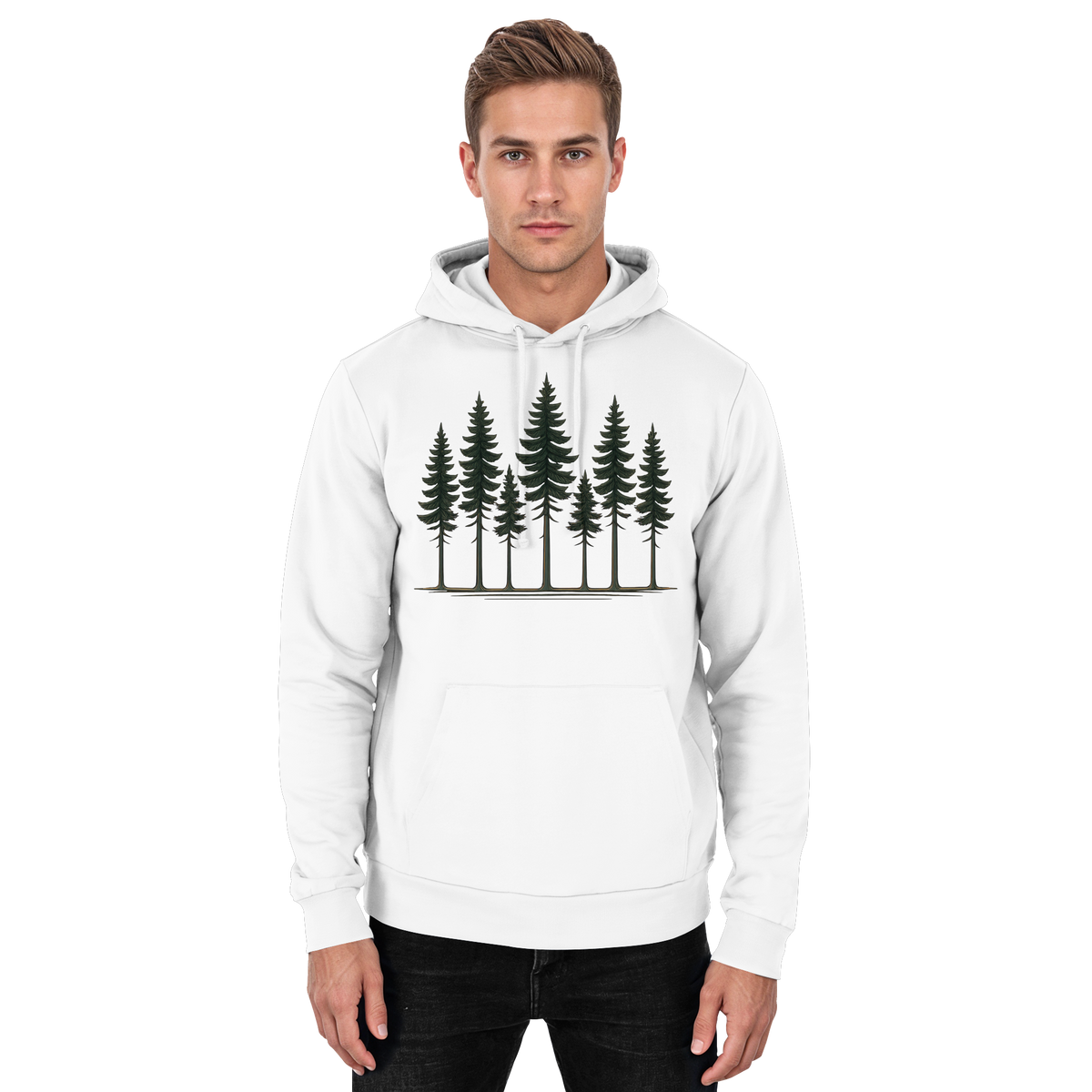
No goal, no distance, no step counter. Just slow walking through the forest, stopping now and then, listening to the wind in the trees and breathing in the smell of wet leaves. That is forest bathing. The idea comes from Japan and is growing in popularity here too. And autumn, with its colours and scents, is a perfect season for it. Put on your Still Roots Hoodie, inspired by forest textures and earthy tones, and discover what forest bathing is, what the science says about it and where you can do it in Belgium.
What Is Forest Bathing?
Forest bathing is being in the forest consciously and slowly, using all your senses: looking, listening, feeling and smelling. It is not a sport and not a hike. You don't have to cover any kilometres. It is about being truly present in nature, free from distraction.
From Japan: Shinrin-Yoku
The Japanese word is shinrin-yoku: shinrin means forest, yoku means bathing. The term was launched in 1982 by the Japanese forestry agency. The idea: people who were stressed by busy modern life could find rest in the forest. At the same time, Japan hoped to encourage the protection of its forests.
What Does the Science Say?
Many big promises are made about forest bathing. What is actually known?
- A Japanese study from 2009 (Qing Li) had small groups of people spend three days in the forest. Their immune cells became more active and their stress hormones fell. But these were very small groups, only in Japanese forests, and without long-term follow-up.
- A large overview study from 2026 brought together 11 studies. On average, forest bathing went together with a slightly lower upper blood pressure (around 4.7 mmHg) and a slightly lower heart rate. Participants also felt less tense, less anxious and less tired. No clear effect on the stress hormone cortisol was found.
- The caveat: according to the researchers, the certainty of the evidence is "very low". They see forest bathing as a possible addition, not a treatment.
In short: forest bathing can help you unwind, and it is in any case a lovely way to spend time in nature. But it is not a medicine.
A 6-Step Guide to Doing It Yourself
- Choose a quiet forest. Preferably one you know, so you don't have to look for the way.
- Switch off your phone, or put it on airplane mode. No photos, no messages.
- Let go of every goal. No distance, no time limit, no finish line.
- Walk very slowly and stop regularly.
- Use your senses one at a time:
- Looking: the colours of the leaves, the light between the branches, a mushroom at the foot of a tree.
- Listening: the wind, a bird, your own footsteps in the leaves.
- Feeling: the bark of a tree, moss, the cool air on your face.
- Smelling: wet earth, pine needles, decaying leaves.
- Take your time. Start with 20 minutes. A guided session often lasts two to four hours.
Want to know which trees you will come across? Then read our article on identifying trees by their leaves.
On a crisp autumn morning, a warm layer helps you stay relaxed, such as the Pine Dusk Hoodie with a row of pine trees against a fading sky.
Where Can You Do Forest Bathing in Belgium?
The Sonian Forest
The Sonian Forest covers more than 4,500 hectares and lies in Brussels, Flanders and Wallonia. Its old beech forests have been partly UNESCO World Heritage since 2017, as Belgium's only natural heritage site. The tall, straight beeches make it one of the most beautiful places for forest bathing. Guided shinrin-yoku sessions are even organised there, in French and English.
Nature Oases of Natuur en Bos
The Flemish agency Natuur en Bos has set up nature oases (natuuroases) in Flanders, places specially meant for finding rest in nature.
- Heverleebos (Leuven)
- Bosland (Pelt)
In Limburg there is also a snoezelbos in Hasselt and a kleine wildernis in Lommel.
Any Other Quiet Forest
In fact, you can forest bathe in any forest. Choose a spot where it is quiet, preferably on a weekday or early in the morning. For inspiration, see the 7 most beautiful autumn forests in Belgium.
Why Autumn Is Ideal
- Colours: the forest is never as colourful as in October and November.
- Scents: wet earth, mushrooms and falling leaves give autumn its typical smell.
- Sounds: the rustle of leaves under your feet and the wind in the branches.
- Peace: outside weekends and holidays, the forests are quiet in autumn.
Do bring warm clothes: whoever walks slowly and stops regularly gets cold more quickly than on an ordinary walk. A sweater such as the Forest Floor Sweatshirt, with mushrooms on the forest floor, fits in perfectly.
Frequently Asked Questions
What is forest bathing?
Forest bathing, or shinrin-yoku, is being in the forest consciously and slowly with all your senses, without a goal or distance. The idea comes from Japan, where it was launched in 1982.
Does forest bathing really work?
Studies point to a slightly lower blood pressure and heart rate, and to less tension and tiredness. According to the researchers, the evidence is still weak. So it is a pleasant addition, but not a treatment.
How long should you forest bathe for?
Start with around 20 minutes. Guided sessions usually last two to four hours.
For Those Who Need the Forest to Unwind
Silence, the light between the trees and the smell of autumn: sometimes that is all you need. Discover our forest designs in the Forest collection, such as the Deep Timber Sweatshirt with a bear in the primeval forest, or the Calm Shore T-shirt with a moose wading calmly through the water, a lovely reminder to slow down. Shipping is free across the EU from €45 (otherwise €4.99).